



Nakshatra and dispositor chains reveal hidden karmic astrology layers
In Vedic astrology, nakshatra shifts, dispositor chains and degree resonance are interpreted as hidden karmic links beneath a birth chart.


By Bilge Türk | Dreams Wisdom
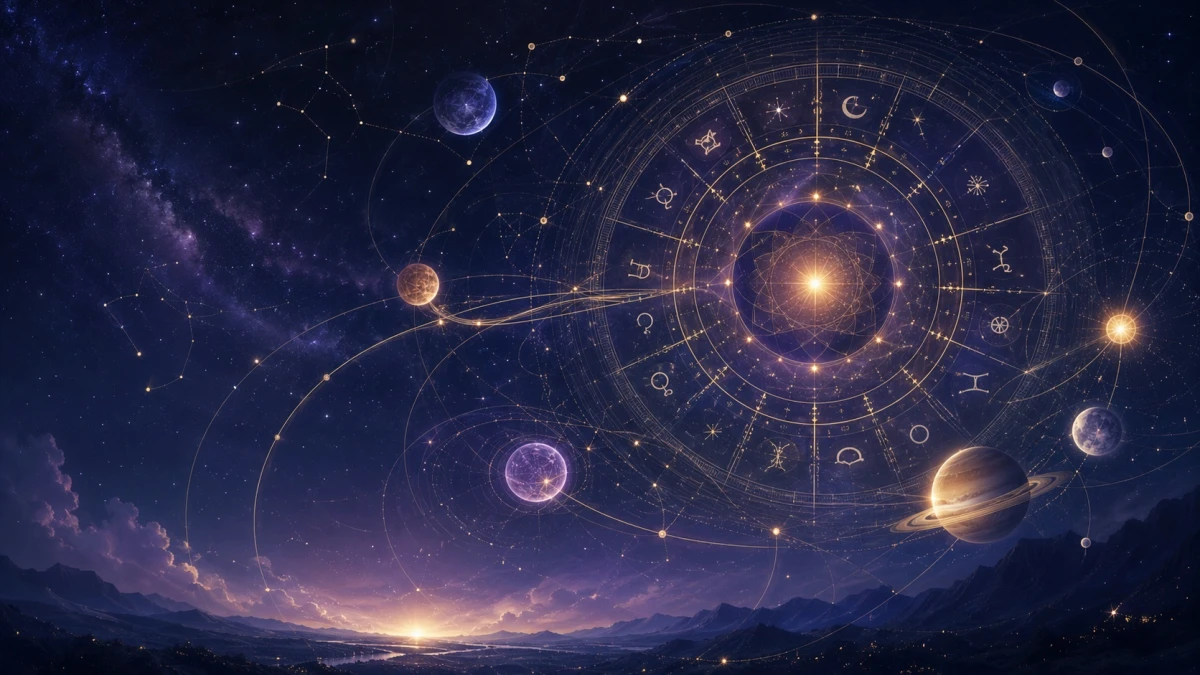
NEW YORK, UNITED STATES — Nakshatra shifts, dispositor chains and degree resonance are described in Vedic astrology as hidden karmic links that may change how a planet behaves in a birth chart.
A social media post by the account Astrotherapist1 has drawn attention to one of the more complex ideas in advanced astrology: a planet may not always act only through the house it occupies. According to this interpretation, a planet can also carry the karma of another house through nakshatra rulership, dispositor chains, degree resonance and eclipse-sensitive points. This approach suggests that some lives cannot be fully understood through basic chart reading alone.
Astrology is more than signs and houses
Most people begin astrology by looking at signs, planets and houses. They may ask where Jupiter is placed, which sign Venus occupies, or whether the seventh house looks strong for marriage and partnership. These are important starting points, but advanced astrology often goes beyond them.


In deeper chart interpretation, a planet is not read as an isolated symbol. It may be linked to other planets, other houses, planetary rulers, nakshatra lords and sensitive degrees. These invisible connections can alter the way a planet expresses itself.
This is why a planet that looks beneficial on the surface may sometimes give difficult results. Likewise, a placement that appears challenging may receive support from another layer of the chart and become more constructive over time.
What is a nakshatra?
In Vedic astrology, nakshatras are lunar mansions, or star divisions, through which the Moon and planets are interpreted. While Western astrology divides the zodiac into 12 signs, Vedic astrology also uses 27 nakshatras to create a more detailed symbolic map of the sky.
Each nakshatra has its own ruler, mythology, symbol, psychological tone and karmic theme. For that reason, two planets in the same sign may behave differently if they are placed in different nakshatras.


This is the basis of the idea discussed in the social media post. A planet may appear to be sitting in one house or sign, but the nakshatra it occupies may connect it to another planet or another area of life. In symbolic astrology, that hidden connection can modify the planet’s results.
How dispositor chains work
A dispositor is the ruler of the sign in which a planet is placed. For example, if a planet is in Taurus, Venus is considered its dispositor because Venus rules Taurus. If Venus is placed in another sign, its ruler is then examined as well. Following this sequence creates what astrologers call a dispositor chain.
In advanced interpretation, the chain can show where a planet’s energy ultimately flows. A planet may look strong in its own position, but its dispositor may be weak, afflicted or connected to a difficult house. That can change how the planet’s promise manifests.
For example, Jupiter may appear auspicious at first glance. But if its dispositor chain leads to Saturn, Mars or a difficult house ruler, Jupiter’s gifts may come through responsibility, delay, pressure or conflict rather than easy expansion.
Why Jupiter may act like Saturn
One of the striking examples in the post is that a benevolent Jupiter can sometimes behave like Saturn. Traditionally, Jupiter is associated with wisdom, faith, teaching, blessings, growth and abundance. Saturn, by contrast, is linked with delay, discipline, restriction, responsibility and karmic tests.
At first, these two planets seem to work in very different ways. Jupiter expands, while Saturn limits. Jupiter opens doors, while Saturn asks for patience. Yet in advanced symbolic readings, Jupiter can become Saturn-like if its nakshatra lord, dispositor chain or degree link connects it to Saturnian themes.
In such a case, Jupiter may still bring wisdom, but only after delay. It may still offer growth, but only after discipline. A person may first experience disappointment, waiting or responsibility before receiving the deeper Jupiterian gift of understanding. The blessing remains, but the method becomes Saturnian.
How Venus can give Mars-like results
Venus is usually associated with love, harmony, beauty, attraction, comfort, relationships and artistic pleasure. Mars is associated with action, anger, conflict, passion, competition and separation. Because of this, the idea that a gentle Venus can produce Mars-like destruction may seem contradictory.
In advanced astrology, however, a planet’s surface meaning is not always the full story. If Venus is placed in a Mars-ruled nakshatra, connected to a harsh dispositor chain, or tied to difficult degrees, its expression can become sharper and more conflict-driven.
This may show up in relationships as passion mixed with struggle, attraction mixed with anger, or love stories that become intense, competitive or unstable. In this reading, Venus does not stop being Venus, but it absorbs a Mars-like current through hidden chart connections.
Why a beautiful seventh house may still bring pain
The seventh house is commonly linked with marriage, partnership, long-term relationships and the people one bonds with closely. When the seventh house appears strong or well-supported, beginners may assume that relationship life will be easy.
The post challenges that assumption. In advanced Vedic interpretation, the visible condition of the seventh house is only one layer. The seventh house ruler, its nakshatra lord, its dispositor chain, eclipse connections and sensitive degrees may carry hidden karmic themes.
This means a person may have what looks like a beautiful seventh house, yet still experience deep pain in marriage or partnership. The issue may not be obvious from the surface placement. It may come from a hidden link to another house, another planet or a karmic pattern activated through nakshatra and degree resonance.
Degree resonance and eclipse degrees
Degree resonance refers to the idea that planets at certain degrees may vibrate with other planets, eclipse points or sensitive chart locations. This is a subtler layer than simple sign or house interpretation.
Eclipse degrees are considered especially significant in many astrological traditions. Solar and lunar eclipses are often linked with turning points, collective shifts and intense periods of awareness. When a person’s natal planets connect closely with eclipse degrees, some astrologers interpret that person as being more sensitive to collective events or major energetic shifts.
This is where the post’s claim that some people “feel events before they happen” fits into symbolic astrology. It is not a scientifically proven mechanism of prediction. Rather, it is an astrological interpretation suggesting that certain charts may be more responsive to collective or transpersonal patterns.
What does planetary infection mean?
The post uses the idea that planets can “infect” one another through subtle energetic links. This should be understood as metaphorical language, not as a literal physical process.
In astrology, a planet can absorb another planet’s symbolism in several ways. It may sit in that planet’s nakshatra. Its dispositor chain may lead to that planet. It may share a degree resonance with that planet. Or it may be tied to an eclipse-sensitive point that activates another area of the chart.
In this symbolic sense, a planet may carry a message that does not belong only to its own house. A planet in one area of life may carry the karmic residue of another area. That is why astrologers who use this method do not stop at the visible placement. They ask what the planet is connected to beneath the surface.
The scientific boundary
These ideas belong to the symbolic and interpretive language of astrology. There is no scientific evidence proving that planets transmit karma, infect one another energetically, or determine human life events through nakshatra chains or degree resonance.
Astronomy studies the physical movement, mass, light and measurable properties of celestial bodies. Astrology interprets those bodies through symbolic, cultural and psychological meanings. The two should not be confused.
Still, astrology remains meaningful for many people as a reflective system. Concepts such as nakshatra karma, dispositor chains and eclipse degrees can help astrology followers explore recurring life patterns, relationship cycles, unexplained sensitivities and symbolic themes in their personal experience.
The highest level of astrology
The central message of the post is that the highest level of astrology is not simply reading zodiac signs. Signs are only the surface. Houses, planets and aspects are also only part of the visible structure.
For advanced practitioners, the deeper task is to follow the invisible currents beneath the chart. That means asking which planet secretly rules the story, which nakshatra is activated, which degree is sensitive, and which house is carrying karma into another house.
In this view, the birth chart is not a flat diagram. It is a living network of connected channels. A planet does not only stand where it is placed. It may carry messages from another house, another ruler, another degree or an eclipse point.
The deeper secret of astrology, according to this perspective, is that life cannot always be understood from the obvious placement alone. The visible chart shows the structure, but the hidden karmic currents may reveal where the real story is flowing.
What's Your Reaction?
 Like
0
Like
0
 Dislike
0
Dislike
0
 Love
0
Love
0
 Funny
0
Funny
0
 Wow
0
Wow
0
 Sad
0
Sad
0
 Angry
0
Angry
0

Editorial Desk |DreamWisdom.com is a comprehensive knowledge and editorial platform focused on dreams, dream interpretation, and dream science. The platform explores religious, psychological, cultural, and scientific perspectives, bringing together classical dream traditions with modern analytical approaches.


















Comments (0)