



Suleiman’s Dream and Testament: The Vision Behind Süleymaniye and a Lesson on Time
A reported dream of Sultan Suleiman the Magnificent that guided the siting of Istanbul’s Süleymaniye complex, and his three emblematic final bequests, reveal how spiritual imagination, urban vision, and moral restraint shaped Ottoman statecraft.


Suleiman’s Dream and Testament: The Vision Behind Süleymaniye and a Lesson on Time
DREAMS WISDOM / DREAMSWISDOM.COM
Dreams in the Ottoman Imagination
Across Ottoman history, dreams were more than private, nocturnal episodes. They were read as meaningful signs—sometimes moral, sometimes political—that could shape statecraft and public life. From the dynasty’s origin myths to later court chronicles, symbolic dreams were recorded, weighed and, at times, acted upon. In that long tradition, the story of Sultan Suleiman—known in Europe as “the Magnificent”—and the vision that is said to have guided the siting of the Süleymaniye Mosque stands as one of the most enduring.
A Hill Above Two Waters: The Vision That Chose the Site
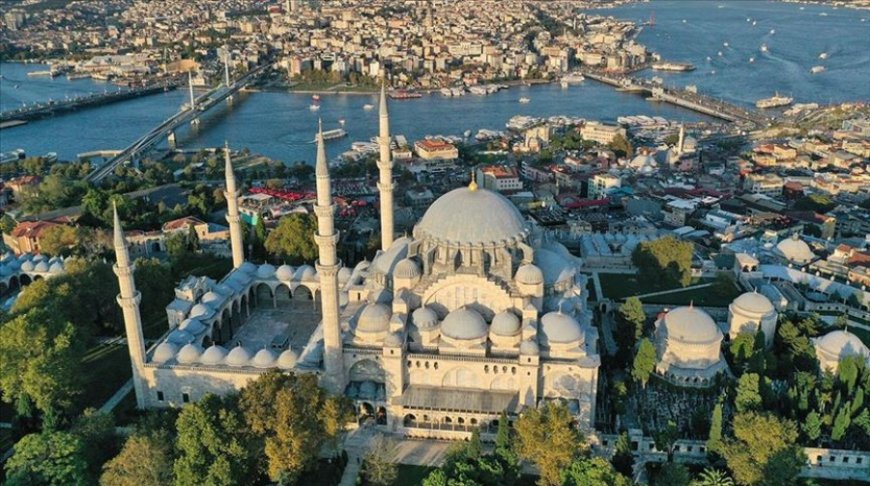
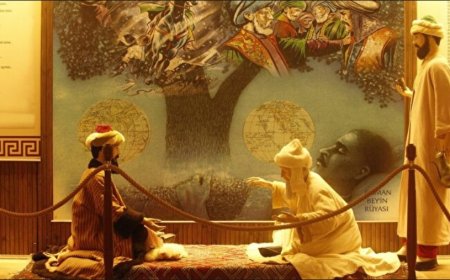
As the account is told, on a blessed night Suleiman dreamed he followed the Prophet to a commanding hill with a wide, luminous view—today the terrace where the Süleymaniye complex crowns Istanbul’s skyline, looking across both the Golden Horn and the Bosphorus. On waking, he summoned his chief architect, Mimar Sinan, and led him there without explanation, announcing the intention to raise a great mosque and külliye (civic-religious complex). Sinan, the anecdote continues, answered as if to confirm the dream, proposing the placement of the mihrab and minbar exactly as if he had seen the same vision. Whether taken literally or figuratively, the story captures how spiritual imagination and urban judgment intertwined in the imperial capital.
From First Stone to a City of Learning
Construction began on June 13, 1550, with Şeyhülislam Ebussuud Efendi laying the first foundation stone by the sultan’s request. Süleymaniye was conceived not only as a place of worship but as a full civic program—medreses, hospital, hospice, library, and kitchens—an intellectual and social engine comparable to a university of its age. Sinan’s design matched grandeur with restraint, folding the complex into the topography rather than overwhelming it. The result—balance, proportion, and clarity—made the mosque a touchstone of world architecture and an emblem of Ottoman statecraft that prized knowledge, public welfare, and harmony with place.


The Magnificent’s Three Bequests
To Suleiman are also attributed three stark final wishes, each a parable on power’s limits. First, he ordered that his bier be borne by the era’s most skilled physicians—a tableau intended to show that even the greatest learning cannot stay death. Second, he decreed that the riches gathered in his reign be distributed along the funeral route, a reminder that worldly wealth has no currency beyond the grave. Third, he asked that his hands remain outside the coffin, empty and visible, so that all might see the sultan departs as he arrived: with nothing. Taken as teaching stories, the bequests translate imperial biography into public ethics—on mortality, stewardship, and the true measure of rule.
Why the Story Still Matters
Read together, the vision of Süleymaniye and the lessons of the testament say something lasting about leadership and public works. The dream narrative is not only mystical; it also encodes a practical urban insight: choose a site that opens the city to itself and anchors its horizon. The funeral parables, meanwhile, press a civic conscience on rulers and citizens alike: invest in institutions that outlive you, and remember time—more than treasure or title—is the rarest resource. In this way, Suleiman’s “dream” and “will” converge into a single message: power is justified when it builds for the common good and tempered when it keeps mortality in view. That is why, centuries on, the dome of Süleymaniye still reads as both architecture and argument.


What's Your Reaction?
 Like
0
Like
0
 Dislike
0
Dislike
0
 Love
0
Love
0
 Funny
0
Funny
0
 Wow
0
Wow
0
 Sad
0
Sad
0
 Angry
0
Angry
0

Editorial Desk |DreamWisdom.com is a comprehensive knowledge and editorial platform focused on dreams, dream interpretation, and dream science. The platform explores religious, psychological, cultural, and scientific perspectives, bringing together classical dream traditions with modern analytical approaches.
















Comments (0)