



Walt Disney’s Dream Empire: How One Man’s Vision Became a Global Phenomenon
An analysis of how Walt Disney transformed “dream” from a personal vision into a global brand—celebrated in the U.S., critiqued in Europe, and cherished as nostalgia in Turkey.
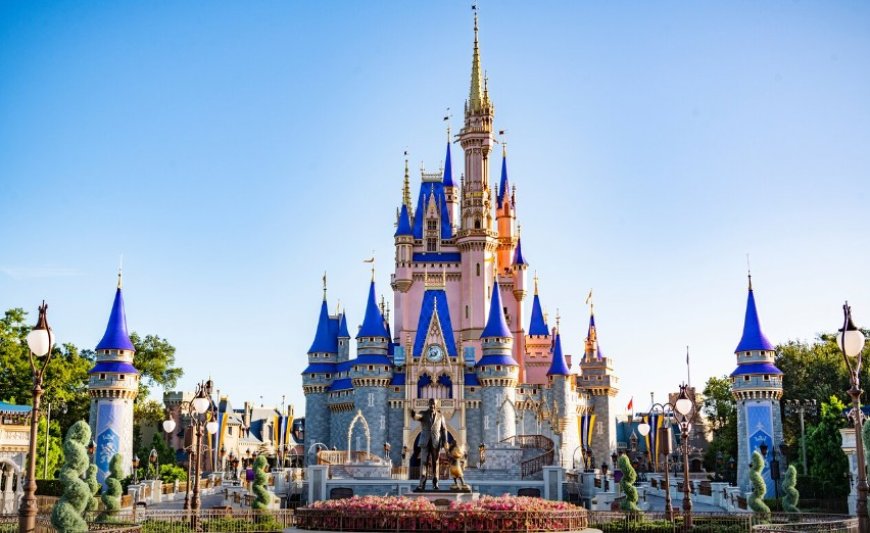


Walt Disney’s Dream Empire: How One Man’s Vision Became a Global Phenomenon
DREAMS WISDOM / DREAMSWISDOM.COM
Not a Dreamer—A Builder
In American media, Walt Disney is often cast as the embodiment of the “American Dream”: a Midwestern kid who fought through failure to build an entertainment empire. Yet the deeper story is less about drifting visions and more about disciplined construction. Disney’s own maxim—“The way to get started is to quit talking and begin doing”—captures his method. He fused artistry with industrial rigor, championing sound in animation, Technicolor, and production pipelines that turned imagination into repeatable craft. In this telling, “dream” means blueprint, budget, and relentless iteration.
Turning Vision into a Brand
Disney’s singular genius was to convert a personal vision into a universal, purchasable experience—the “Disney Dream.” It rests on three pillars: curated innocence (a moral universe where good prevails), wonder (the improbable made possible), and closure (the comfort of a happily-ever-after). Disneyland refined the formula in physical space: a meticulously controlled environment marketed as “The Happiest Place on Earth.” Visitors do not merely watch a story; they step into one—then take pieces of it home through merchandise, music, and memory.
The European Critique
Across the Atlantic, critics—especially in France—have long interrogated that dream. They argue Disney’s retellings flatten the darker, more complex textures of European folklore (Grimm, Andersen, Perrault) into sanitized narratives aligned with American optimism. Others view the “dream” as a consumption loop disguised as enchantment: to sustain wonder, one must buy the ticket, the toy, the trip. A further line of critique warns that easy comfort can become an escape from reality’s messier truths. Whether one agrees or not, the criticism underscores Disney’s cultural power: only an influential myth invites such sustained pushback.


Between Myth and Biography
The legend says Mickey Mouse arrived in a literal dream. The record points elsewhere: after losing the rights to his earlier character Oswald the Lucky Rabbit, Disney brainstormed on a train ride west, drawing on memories of a tame mouse that had roamed his early studio. The “dream appearance” myth survives because it is perfectly on-brand—more magical than contracts, trains, and crisis-driven creativity. But the more prosaic version reveals something instructive: Disney’s “dreams” were engineered responses to setbacks, where loss became a lever for reinvention.
Why the Dream Endures
Disney’s legacy resists a single frame. In the United States, he remains the patron saint of perseverance and innovation; in Europe, a flashpoint for debates about cultural homogenization; in Turkey and much of the world, a vessel of childhood nostalgia. All are true from different vantage points. The enduring magic is not that Disney dreamt—it is that he scaled a dream, systematized it, and sold it as a shared experience. The real trick, then and now, is distribution: not merely enchanting audiences, but building the factories of enchantment.


What's Your Reaction?
 Like
0
Like
0
 Dislike
0
Dislike
0
 Love
0
Love
0
 Funny
0
Funny
0
 Wow
0
Wow
0
 Sad
0
Sad
0
 Angry
0
Angry
0

Editorial Desk |DreamWisdom.com is a comprehensive knowledge and editorial platform focused on dreams, dream interpretation, and dream science. The platform explores religious, psychological, cultural, and scientific perspectives, bringing together classical dream traditions with modern analytical approaches.















Comments (0)