



Salvador Dalí’s Dreamworld: Mapping the Surrealist Subconscious
An in-depth exploration of Salvador Dalí’s dream-inspired art, from his “key sleep” technique to the paranoiac-critical method, uncovering how surrealism unlocked the mysteries of the subconscious.
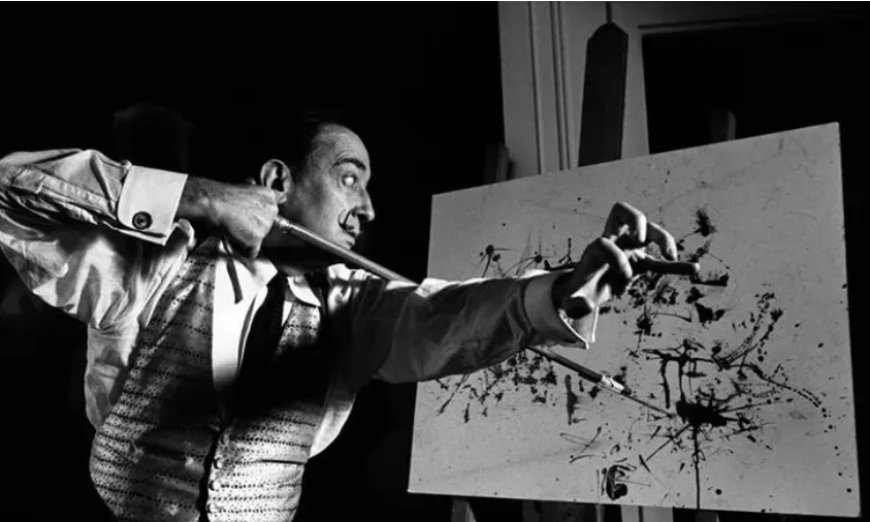


Salvador Dalí’s Dreamworld: Mapping the Surrealist Subconscious
DREAMS WISDOM / DREAMSWISDOM.COM
The Fusion of Subconscious and Art
Salvador Dalí, one of the leading figures of the 20th-century surrealist movement, drew much of his inspiration from the uncharted landscapes of dreams and the subconscious mind. Influenced by Sigmund Freud’s psychoanalytic theories, Dalí embraced the surrealist conviction that dreams represent unfiltered creativity, free from the restraints of logic and rational thought. His works reveal how deeply he sought to explore the mysteries of the human psyche through art.
The “Key Sleep” Technique
Among Dalí’s most curious creative methods was his famous “key sleep” or “vertical nap procedure.” Sitting upright in a chair, Dalí would hold a heavy metal key in his hand while placing a plate on the floor beneath him. As he drifted into slumber, the key would slip from his fingers, strike the plate, and startle him awake.
This moment of half-sleep and half-consciousness—known as the hypnagogic state—offered Dalí fleeting visions, which he quickly translated onto canvas. These dreamlike fragments produced the strange, haunting atmospheres so characteristic of his paintings. Interestingly, other great minds such as Thomas Edison are also known to have used similar techniques to capture flashes of inspiration between sleep and wakefulness.


The Paranoiac-Critical Method
Another cornerstone of Dalí’s artistic philosophy was his self-developed “paranoiac-critical method.” This process began with him embracing irrational, hallucinatory thoughts, which he later subjected to a detached, analytical eye. The result was art that merged subconscious imagery with deliberate artistic precision.
His iconic painting The Persistence of Memory—featuring the famous melting clocks—stands as a testament to this method. The distorted timepieces illustrate Dalí’s reflections on the fluidity and relativity of time, bridging surrealist vision with philosophical inquiry.
Dreams on Canvas
Dalí’s dream-inspired works are not only visually striking but also steeped in symbolic meaning. In Dream Caused by the Flight of a Bee Around a Pomegranate a Second Before Awakening, for instance, the buzz of a bee sets off a chain of surreal dream imagery, unfolding in rapid succession.
Beyond painting, Dalí’s influence stretched into cinema. His collaboration with Alfred Hitchcock on the dream sequences of Spellbound demonstrated his mastery of visual symbolism, embedding surreal elements into popular culture.


Conclusion: The Explorer of Inner Landscapes
Through his unique techniques and philosophical depth, Salvador Dalí transformed dreams into masterpieces, proving the subconscious to be a wellspring of artistic innovation. His works continue to mesmerize modern audiences, inviting viewers to embark on their own journey through the landscapes of the unconscious.
Dalí was more than a painter—he was a pioneer of the mind, mapping the surreal boundaries between reality and imagination.
What's Your Reaction?
 Like
0
Like
0
 Dislike
0
Dislike
0
 Love
0
Love
0
 Funny
0
Funny
0
 Wow
0
Wow
0
 Sad
0
Sad
0
 Angry
0
Angry
0

Editorial Desk |DreamWisdom.com is a comprehensive knowledge and editorial platform focused on dreams, dream interpretation, and dream science. The platform explores religious, psychological, cultural, and scientific perspectives, bringing together classical dream traditions with modern analytical approaches.
















Comments (0)