



The Mind’s Canvas: Dreams, Psychoanalysis, and the Unconscious in Salvador Dalí’s Art
An editorial analysis of Salvador Dalí’s art that traces Surrealism’s roots, explains Freud’s impact, unpacks the Paranoiac–Critical Method, decodes major symbols, and reads key masterpieces through the logic of dreams.
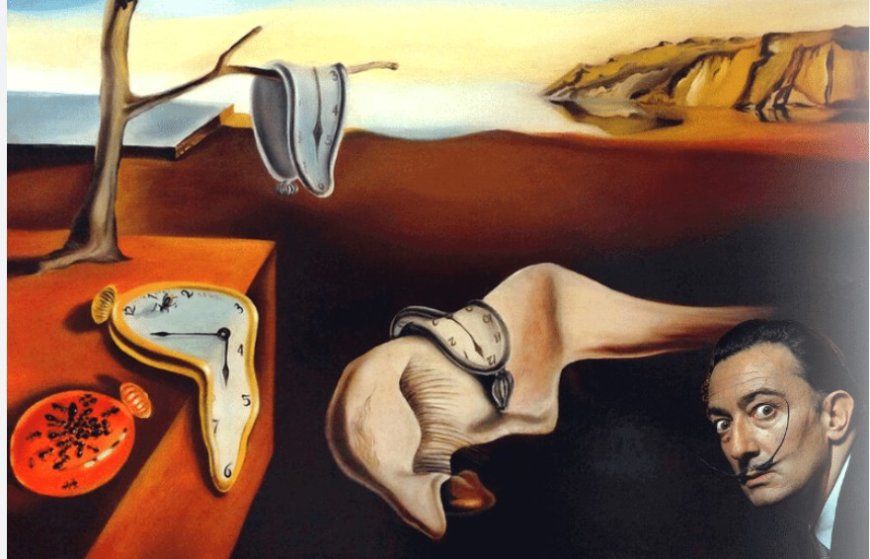


The Mind’s Canvas: Dreams, Psychoanalysis, and the Unconscious in Salvador Dalí’s Art
DREAMS WISDOM / DREAMSWISDOM.COM
Surrealism’s Roots: From Disillusion to a New Aesthetic
Born from the disillusion that followed World War I, Surrealism sought to overturn reason’s failures by uniting dream and waking life into a higher “surreality.” Led by André Breton, the movement treated the unconscious as a creative engine rather than a pathology. This intellectual climate incubated Salvador Dalí’s singular vision: a visual language that turns inner landscapes into meticulously rendered scenes, making the imaginary as persuasive as the real.
Freud’s Revolution: A Scientific Lexicon for Inner Myth
Dalí’s encounter with Sigmund Freud’s ideas—especially The Interpretation of Dreams—offered a framework to organize deeply personal themes: desire and repression, mortality and anxiety, childhood fixations and psychosexual development. His long-sought meeting with Freud in 1938 symbolized the fusion of theory and practice. For Dalí, Freud was not just an influence; he was a source of legitimation. By framing his private mythology in psychoanalytic terms, Dalí elevated eccentric visions into psychologically resonant statements with universal reach.
The Paranoiac–Critical Method: Systematizing the Irrational
Dalí’s signature contribution, the Paranoiac–Critical Method (PCM), invited controlled delirium. He intentionally provoked hallucinatory associations—seeing multiple images or unlikely linkages in ordinary objects—then subjected the results to cool, analytical composition. Unlike the passive “automatism” favored by some Surrealists, PCM was an active “critical exploitation” of the unconscious. Dalí’s famous remark—“The only difference between me and a madman is that I am not mad”—captures this stance: the irrational is harnessed, catalogued, and painted with academic precision. The result is a productive paradox: hyper-logic in technique paired with hyper-illogic in content.


Technique and Symbol: Catching Hypnagogic Sparks
To seize liminal imagery, Dalí used micro-sleep strategies like the “key-nap”: dozing in a chair while holding a metal key that clattered onto a plate at the threshold of sleep, jolting him awake to sketch the fresh vision. He described the outcomes as “hand-painted dream photographs,” a mission statement for rendering the impossible with documentary clarity. Across his oeuvre, a consistent symbolic lexicon emerges: melting clocks (the fluidity of psychological time), ants (decay and mortality, sometimes unruly desire), spindly elephants bearing obelisks (the instability of power), eggs (birth, hope, perfection), crutches (support and reality-anchors), and drawers opening from bodies (hidden memories and repressed sexuality). Binding these is the dialectic of hard versus soft—outer reality’s rigid structures set against the inner world’s pliant flux.
Case Studies: How Dream Logic Looks on Canvas
The Persistence of Memory (1931) dismantles chronometric certainty: clocks droop like soft cheese over a barren Catalan landscape, while ants swarm a rigid watch to signify decay. The painting functions as PCM in action—confounding yet precisely staged.
Dream Caused by the Flight of a Bee Around a Pomegranate a Second Before Awakening (1944) visualizes a Freudian mechanism: an external stimulus triggers a cascade—bee to sting, sting to spear, calm to violence—just before waking.
In The Elephants (1948), monumental creatures stand on impossibly thin legs, a visual oxymoron that hints at power’s fragility; obelisks intensify the tension between weight and weightlessness.
The lesser-known Dream (1931) condenses Freud’s vocabulary: sealed eyelids, an ant-clogged mouth, a column morphing into a bearded bust, and a golden key—an emblem of access to the unconscious.
Across these works, the Catalan seascape serves as psychological stage set: a stable, hyper-real ground onto which mutable dream-objects are projected, making the mind’s drama legible.
Legacy: Democratizing the Surreal and Redefining the “Real”
Dalí translated avant-garde experimentation into a popular visual idiom. His images leapt from galleries into cinema, fashion, and advertising, helping install the unconscious as a shared cultural arena. By perfecting the “authentic fake”—impossible scenes rendered with forensic detail—Dalí blurred the line between reality and realism, a premonition of today’s CGI-saturated culture. His enduring legacy is a paradigm in which classical technique articulates irrational content, inviting generations to probe their own inner geographies.


What's Your Reaction?
 Like
0
Like
0
 Dislike
0
Dislike
0
 Love
0
Love
0
 Funny
0
Funny
0
 Wow
0
Wow
0
 Sad
0
Sad
0
 Angry
0
Angry
0

Editorial Desk |DreamWisdom.com is a comprehensive knowledge and editorial platform focused on dreams, dream interpretation, and dream science. The platform explores religious, psychological, cultural, and scientific perspectives, bringing together classical dream traditions with modern analytical approaches.














Comments (0)