



Freud and Dreams: Unlocking the Royal Road to the Unconscious
An exploration of Freud’s theory of dreams: their roots in memory and reality, the four sources of stimulation, the principles of wish fulfillment and dream distortion, and the lasting impact of The Interpretation of Dreams on psychology and culture.
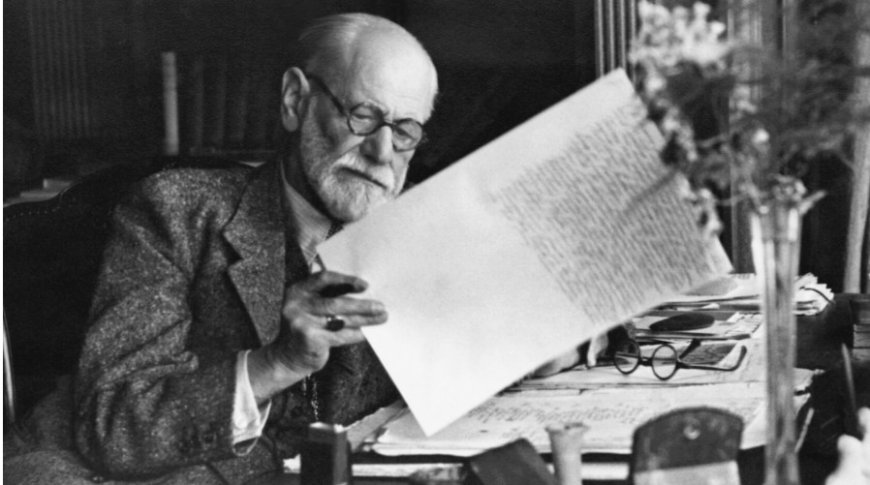


Freud and Dreams: Unlocking the Royal Road to the Unconscious
DREAMS WISDOM / DREAMSWISDOM.COM
From Enlightenment Skepticism to Psychoanalytic Inquiry
During the Age of Enlightenment, dreams were often dismissed as meaningless or irrational. Sigmund Freud’s groundbreaking work changed this view, reframing dreams as essential mental events that concern both healthy and disturbed individuals. Famously declaring that “dreams are the royal road to the unconscious,” Freud argued that dreams reflect some of the most complex and enigmatic experiences of human life. Given the vast time we spend asleep, dreams stand as our most significant recurring encounter with the workings of the unconscious.
The Raw Materials of Dreams: Reality, Memory, and Childhood
Freud maintained that dreams always draw their content from reality, whether or not the dreamer recognizes the source. A passing advertisement, a forgotten word, or a fleeting encounter may resurface in disguised form during sleep. Childhood experiences, alongside day-to-day impressions, provide the deepest well of dream material. In this way, dreams serve as a gateway to memories and emotions often inaccessible in waking life.
Four Sources of Stimulation
According to Freud, four types of stimuli can shape dreams: external sensory impressions, internal sensory experiences, organic bodily stimuli, and purely psychic excitations. Hunger, thirst, pain, and residual emotional states can all influence the narrative. While modern neuroscience situates dreams within cyclical brain activity during sleep, Freud’s insight—that external and internal triggers color dream themes—remains influential.


Wish Fulfillment and Dream Distortion
At the heart of Freud’s theory lies the idea that every dream represents a form of wish fulfillment. Children’s dreams illustrate this most clearly: a thirsty child dreams of drinking water. In adults, however, social norms and moral codes enforce a kind of “dream censorship,” producing disguised or distorted content. Here, Freud introduced the concept of “dream distortion,” through which repressed desires and anxieties resurface in symbolic, condensed, or displaced forms. The underlying emotions remain authentic, even when the imagery shifts.
Interpreting Dreams: Beyond Symbols
Freud rejected simplistic, one-size-fits-all symbolic dictionaries. Instead, he preferred a “decoding” approach that considered not just dream elements but also the dreamer’s personal circumstances. The same symbol, he argued, could mean something entirely different for a businessman, a priest, or a child. To uncover the hidden meaning, dreams must be analyzed in fragments, with each detail linked to the dreamer’s unique life context.
The Emotional Reality of Dreams
Although the scenarios in dreams may be illusory, the emotions they provoke are genuine. Fear of an imagined attacker, joy at an impossible reunion, or grief in a symbolic loss—these feelings are experienced with the same intensity as in waking life. Freud observed that even when dream content is censored, the accompanying emotions often remain intact, making dreams a powerful lens into suppressed or unresolved desires.
Lasting Legacy in Psychology and Culture
Freud’s The Interpretation of Dreams remains one of the most significant texts in psychology. His thesis—that dreams reveal unconscious wishes and conflicts—continues to influence psychotherapy, literature, and cultural studies alike. While contemporary science highlights additional functions such as memory consolidation and emotional processing, Freud’s central claim endures: dreams provide a privileged pathway into the hidden dynamics of the human mind.


What's Your Reaction?
 Like
0
Like
0
 Dislike
0
Dislike
0
 Love
0
Love
0
 Funny
0
Funny
0
 Wow
0
Wow
0
 Sad
0
Sad
0
 Angry
0
Angry
0

Editorial Desk |DreamWisdom.com is a comprehensive knowledge and editorial platform focused on dreams, dream interpretation, and dream science. The platform explores religious, psychological, cultural, and scientific perspectives, bringing together classical dream traditions with modern analytical approaches.

















Comments (0)