



Jung and Dreams: A Language of Symbols, a Psychology of Balance
A newsroom-style overview of Jung’s approach to dreams: context reconstruction, amplification, active imagination, archetypal symbolism, and the balancing (compensatory) function of dreams—offered in clear, culturally sensitive language for general readers.
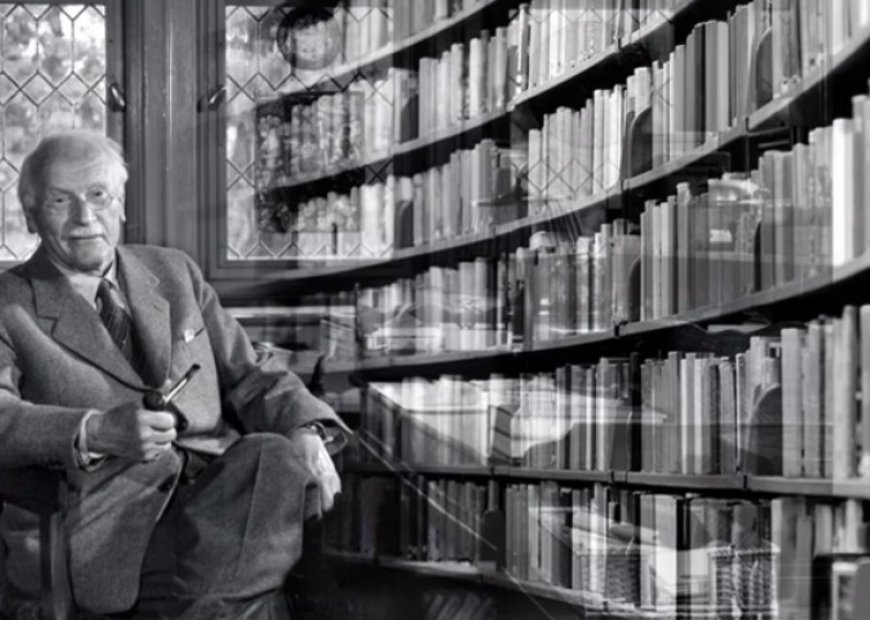


Jung and Dreams: A Language of Symbols, a Psychology of Balance
DREAMS WISDOM / DREAMSWISDOM.COM
Dreams as a Natural Process, Not a Trick of the Mind
For Carl Gustav Jung, dreams are natural psychological events that arise when conscious will recedes during sleep. Far from being a deceptive lure, a dream possesses inner coherence, intention, and meaning. It can even touch on religious themes. Jung argued that any serious interpretation must go beyond routine, “one-size-fits-all” readings: the dream’s logic and motivation emerge only when we attend closely to its content and to the dreamer’s life.
Context Before Conclusions: Reconstructing the Scene
Jung insisted that a credible reading begins with context. The interpreter gathers the web of relations surrounding the dream—recent experiences, emotional climate, conflicts, and the dreamer’s associations to each image. This reconstruction does not yield a final verdict; it opens a line of inquiry. Rather than treating a single dream as definitive, Jung favored analyzing a series of dreams to reveal a central, recurring theme. He encouraged patients to keep written records and to sketch images, which helps trace how the unconscious is shifting over time.
Beyond Dictionaries: Amplification and Living Symbols
Unlike Freud’s emphasis on repressed wishes or fixed meanings, Jung located meaning in the Self and the collective unconscious. His method of amplification widens an image—say, a table made of pine—by exploring the dreamer’s personal links to it and by comparing parallel motifs from myth, religion, art, and cultural history. In Jung’s view, a symbol is not a mere sign; it points beyond its obvious sense and carries unconscious content. Each dream image acquires layers of significance that vary with the dreamer’s biography and culture.


Active Imagination: From Passive Viewing to Creative Dialogue
Jung urged dreamers to move from passive recall to active imagination—engaging the image through writing, drawing, or modeling to discover what it “wants to say.” This practice distinguishes disciplined inner work from aimless fantasy. It can illuminate “dark” areas of the psyche and support psychological compensation—the mind’s tendency to balance a one-sided conscious attitude. A dream that punctures idealization (for instance, showing a flawless father acting badly) may restore proportion and autonomy.
Personal and Collective Layers: Archetypes in the Background
Some dreams exceed personal biography, drawing on archetypal patterns—figures and motifs that recur across eras and cultures. Jung called such episodes “collective dreams.” Understanding them may require historical and mythological parallels. Though modern life feels far removed from ancestral worlds, Jung held that our unconscious still “thinks” in ancient images; exploring them can deepen experience, reveal options for action, and reconnect us with human roots.
Method with Humility: Why No Standard Reading Exists
For Jung, there is no universal key that unlocks every dream. The interpreter must allow the material to speak before imposing theory. Free association that drifts away from the image can spotlight complexes but may ignore the dream’s own message. The more faithful approach keeps returning to the image, clarifying its features and history until the dreamer, not the analyst, recognizes meaning. Ultimately, the goal is not to “unmask” a complex but to transform the dreamer’s relationship to it.


What's Your Reaction?
 Like
0
Like
0
 Dislike
0
Dislike
0
 Love
0
Love
0
 Funny
0
Funny
0
 Wow
0
Wow
0
 Sad
0
Sad
0
 Angry
0
Angry
0

Editorial Desk |DreamWisdom.com is a comprehensive knowledge and editorial platform focused on dreams, dream interpretation, and dream science. The platform explores religious, psychological, cultural, and scientific perspectives, bringing together classical dream traditions with modern analytical approaches.





















Comments (0)