



Dreaming of Hell (Jahannam): What It Signifies in Classical Islamic Dream Interpretation
Dreaming of Hell in Islamic interpretation—meanings, warnings, and remedies. Learn what entry, exit, flames, guards, and Hell’s foods signify. Act now for reform.


Dreaming of Hell (Jahannam): What It Signifies in Classical Islamic Dream Interpretation
DREAMS WISDOM / DREAMSWISDOM.COM
Overview: From Divine Warning to Moral Reckoning
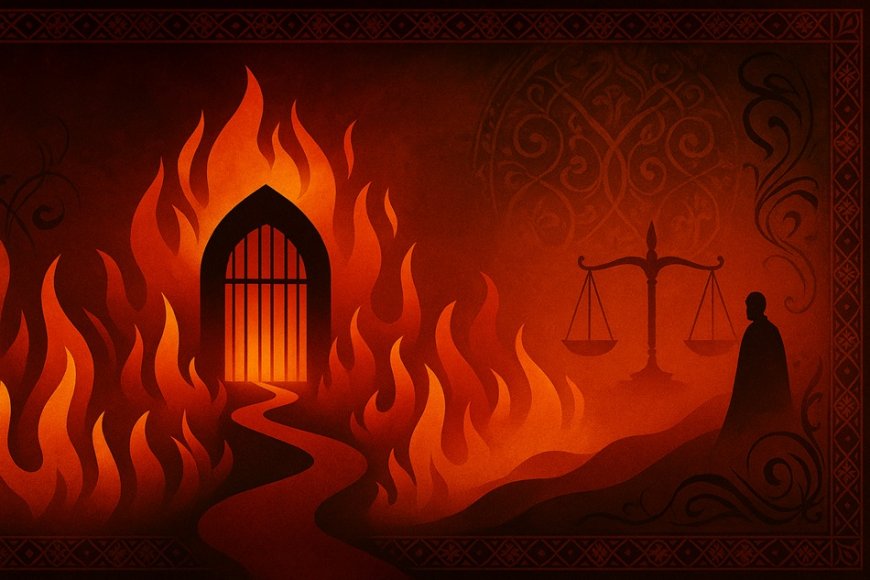
In classical Islamic dream literature, seeing Hell (Jahannam) is almost never casual. It is read as a grave spiritual alert tied to sin, injustice, hardship, or moral drift. Depending on the scene—entering, exiting, being chained, hearing flames, eating from its foods—the dream can signal anything from imminent repentance and rescue to persisting in serious wrongdoing. Scholars consistently advise the dreamer to review conduct, make tawba (repentance), restore rights, and avoid prohibited earnings.
Imam Ja‘far al-Ṣādiq: Six Core Readings
According to Imam Ja‘far al-Ṣādiq, dreaming of Hell can point to six themes: divine anger, committing sins, the oppression of a tyrant, afflictions and trials, humiliation, and consuming the property of orphans or usury. This compact framework sets the ethical tone: the vision calls for self-audit and immediate course correction.
‘Allāmah Majlisī: A Call to Repent
‘Allāmah Majlisī reads the image of Hell—or being chained within it—as a sign of exposure to divine wrath, urging urgent repentance. Being tongue-tied in Hell underscores a state of sinfulness: the conscience is muted, and speech—often a vehicle of truth—has failed its task.


Ibn Sīrīn: Entering, Burning, and Being Thrown
Ibn Sīrīn’s treatment is notably specific:
-
Entering Hell and never leaving: a mark of rebellious sin and a cue that the dreamer’s end could be near—repentance is imperative.
-
Entering without harm: temporary hardship followed by relief.
-
Eating or drinking in Hellfire; being burned: evidence of corrupt deeds and their consequences in the Hereafter.


-
Dragged by a guard (zabānī) and thrown by the hair: deep misfortune and moral downfall.
Kirmanī: Death in Sin, False Knowledge, and Unlawful Wealth
For Kirmanī, entering Hell may portend dying while persisting in sin.
-
Eating from Hell’s plants (e.g., zaqqūm) signals preoccupation with misguiding, baseless “knowledge” that harms its seeker.
-
Drawing a sword and entering Hell: indecent or blasphemous speech.
-
Eating Hellfire: consuming orphan’s wealth, a grave transgression.
Jābir al-Maghribī: Being Dragged, Hearing the Roar
Jābir al-Maghribī warns that being dragged to Hell signifies an end shaded by disbelief. Hearing the crackle and roar of Hellfire can paradoxically foreshadow power or political leverage, a reminder that worldly rise without piety can still be spiritually perilous. Standing by Hell’s brink suggests financial strain and anxieties over provision.
Contemporary Ulama: Enemies, Peril—and a Way Out
Modern scholars often summarize: being in Hell hints at conflict with adversaries or entanglement in hostile environments; escaping Hell points to deliverance from a serious danger. The practical counsel remains classic: make amends, abandon harmful ties, and seek lawful sustenance.
Iḥyā’ & Diyanet: Moral Diagnosis and Divine Reminder
-
Iḥyā’ links Hell to need, sin, disbelief, heedlessness, and moral chaos. Turning back at the gate signifies abandoning a major sin at the last moment. Seeing the gate closed can indicate that divine mercy still envelopes the dreamer. Encountering Mālik, the guardian of Hell, with favor suggests a sound deed embraced by the community; his displeasure warns of actions that earn punishment.
-
Diyanet frames entry into Hell as poverty, grief, and liability to punishment, yet reaching the gate and returning means repentance. Witnessing people punished in Hell serves as a divine admonition to the dreamer. Detailed layers (e.g., Saqar, Sa‘īr, Hāwiya, Jaḥīm, Laẓā, Hutama) mirror specific vices: neglecting alms, mockery and slander, cheating in measure, preferring worldly gain to the Hereafter, and devilish traits.
Imam al-Nābulusī: Nuanced Scenes, Concrete Counsel
Imam al-Nābulusī presents a wide palette:
-
Entering Hell: major sins, forgetfulness of God; exiting safely: relief from worldly anxieties and successful repentance.
-
Hell approaching: unavoidable hardship under oppressive authority—repent and seek God’s protection.
-
Smiling while entering: brazen impiety coupled with complacency in worldly comforts.
-
Being pushed in by someone: that person’s influence toward grave sin (e.g., murder, adultery).
-
Walking over embers, being scalded, tasting Hell’s food/drink, stung by serpents: markers of injustice, bloodshed, and persisting in innovations and alliances with the wicked.
-
Seeing Mālik favorably: love of God, His Messenger, and the believers; Mālik’s aversion: deeds that merit punishment.
-
Entering then leaving: by God’s will, entry to Paradise after repentance.
Ethical Takeaways: What the Dreamer Should Do
Across classical authorities, the action points converge:
-
Repent sincerely and promptly (tawba).
-
Restore rights: avoid usury, return orphan property, repay debts, correct measures and weights.
-
Leave harmful influences: shun companions who normalize major sins.
-
Reform speech: abandon slander, mockery, obscene or blasphemous talk.
-
Give alms (zakāt/sadaqa) and pursue lawful earnings.
-
Rebuild worship: prayer, fasting, remembrance, and seeking sound knowledge.
What's Your Reaction?
 Like
0
Like
0
 Dislike
0
Dislike
0
 Love
0
Love
0
 Funny
0
Funny
0
 Wow
0
Wow
0
 Sad
0
Sad
0
 Angry
0
Angry
0

Editorial Desk |DreamWisdom.com is a comprehensive knowledge and editorial platform focused on dreams, dream interpretation, and dream science. The platform explores religious, psychological, cultural, and scientific perspectives, bringing together classical dream traditions with modern analytical approaches.





















Comments (0)